


• Bao, R., Che, Y., Liu, M., Zhang, N., Zhou, Y., Dong, L., Li, S., Sherwood, O. A., Yu, M., Chen, Z., Yang, S., Wang, N., Zhu, L., Chen, J., Bao, M., Li, H., Chen, L., Wu, W., Ma, H., & Burdige, D. J. (2026). Nature Communications. https://doi.org/10.1038/s41467-026-74250-2
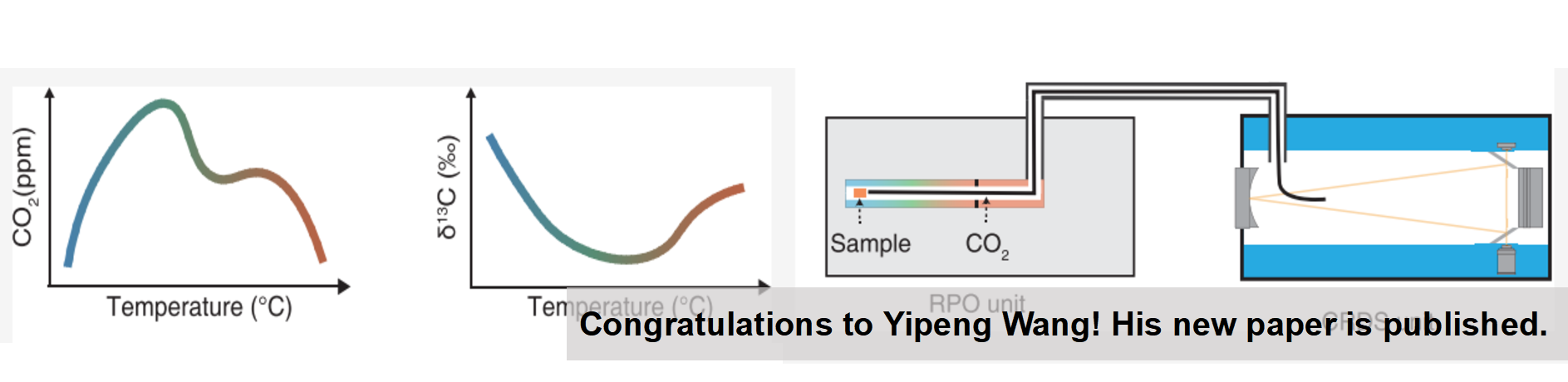
Abstract: Methane released from the subseafloor is significantly attenuated during upward migration, yet the preservation of methane-derived organic carbon (OC) in global deep-sea sediments remains poorly understood. Here, we measured carbon isotopes coupled with temperature-ramped analyses on various methane seepage sediments. Our results reveal a correlation between the radiocarbon (14C) content in deep-sea surface sediments and sulfate-methane transition depth. Notably, our findings suggest that a substantial amount of 14C-depleted OC may originate from deep-seated methane and is efficiently preserved in surface seepage sediments. We propose that the efficient OC preservation is related to microbial-mediated aggregate formation at the seawater-sediment interface, where physical occlusion within coarse-grained matrices reduces oxygen availability and enhances OC stability. We estimate that at least 6 Tg C of methane-derived OC are preserved annually in surface sediments of the global continental slopes. This process may play a non-negligible role in OC preservation in sediments, reducing methane emission into the atmosphere.
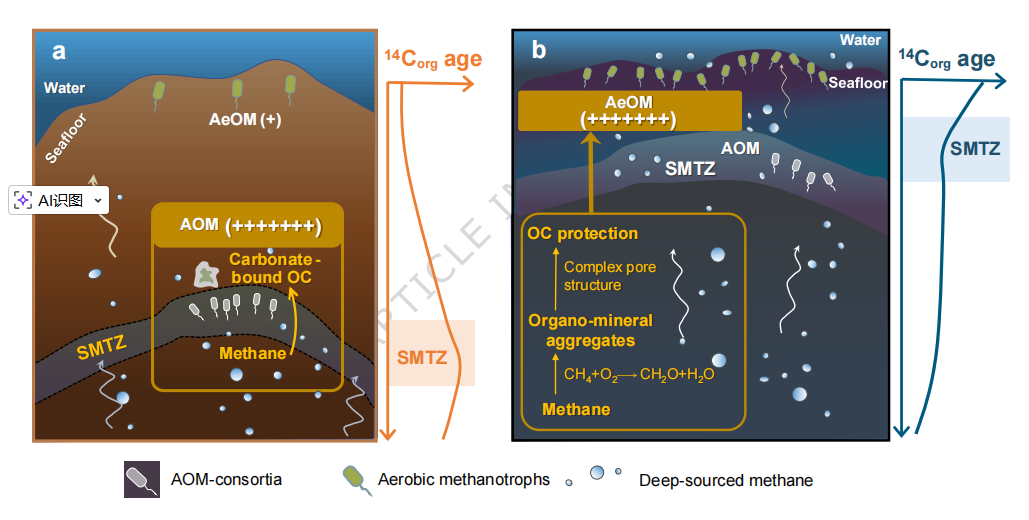
Conceptual framework illustrating the role of sulfate-methane transition (SMT) zone in regulating the preservation of methane-derived OC in marine sediments.
Citation: Bao, R., Che, Y., Liu, M., Zhang, N., Zhou, Y., Dong, L., Li, S., Sherwood, O. A., Yu, M., Chen, Z., Yang, S., Wang, N., Zhu, L., Chen, J., Bao, M., Li, H., Chen, L., Wu, W., Ma, H., & Burdige, D. J. (2026). Efficient preservation of old methane-derived organic carbon in deep-sea surface sediments. Nature Communications. https://doi.org/10.1038/s41467-026-74250-2