


• Chu, M., Liu, K., Cai, Z., Rasbury, T., Kölling, M., Zabel, M., McHugh, C., Strasser, M., Ikehara, K., & Bao, R. (2026). Nature Communications. https://doi.org/10.1038/s41467-026-72049-9
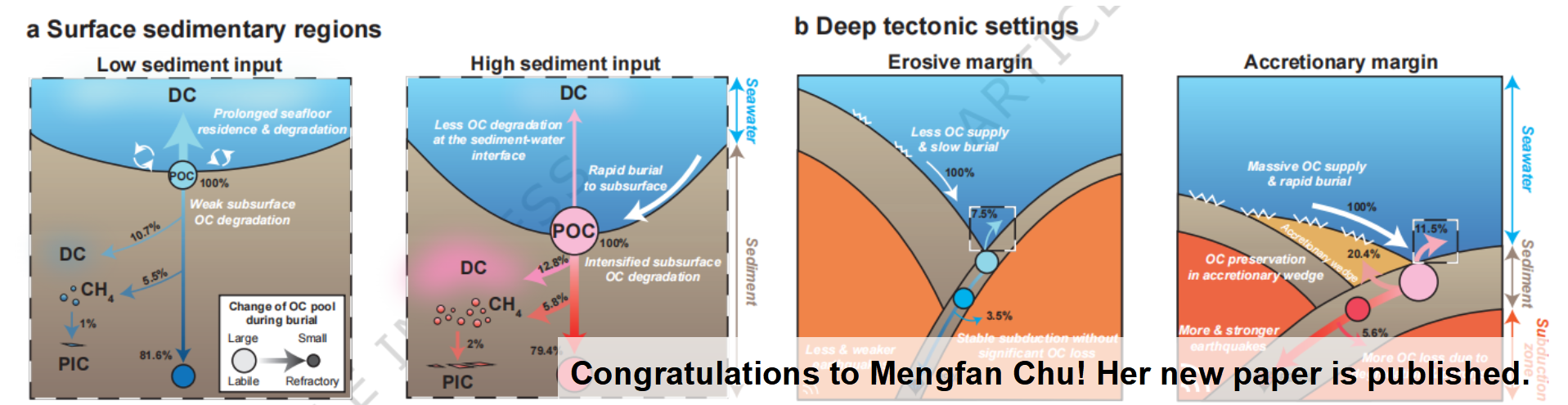
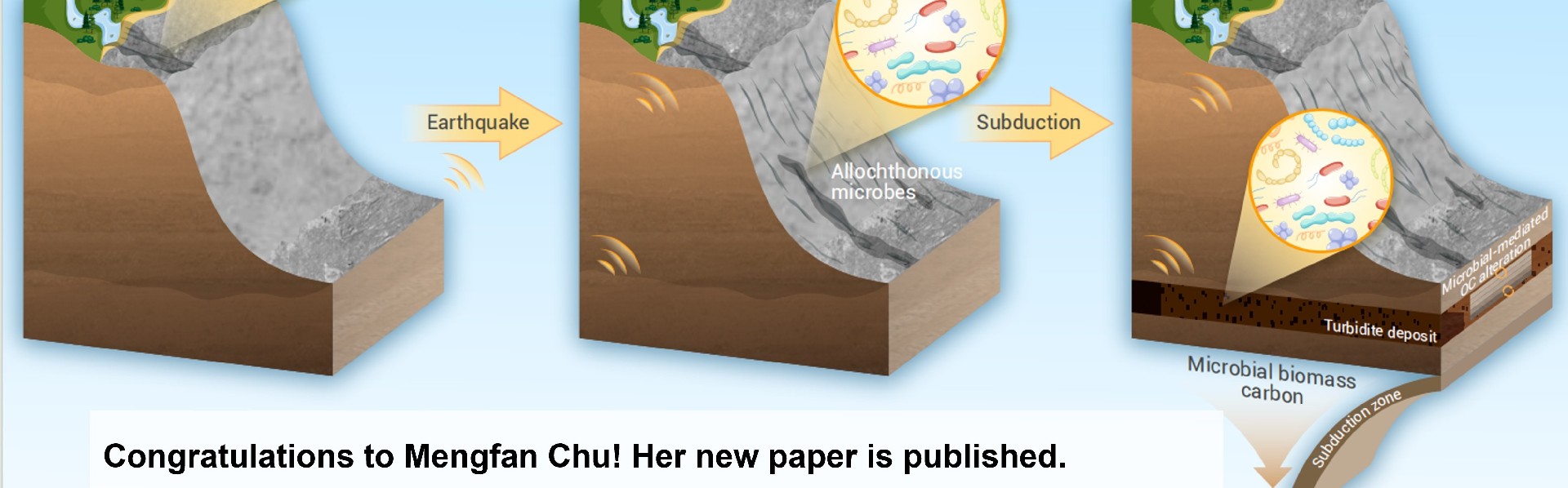
Abstract: The subduction organic carbon (OC) flux is closely linked with seafloor sedimentation processes.In hadal trenches, sediment transport and resuspension caused by turbidity events provide rapid feedback of subducting carbon fate to seafloor sedimentation dynamics. Here we demonstrate that sediment sorting creates distinct OC burial patterns in the Japan Trench: Prolonged seafloor residence enables preferential removal of labile OC components and result in a refractory subsurface OC pool. Conversely, rapid sediment burial shortens seafloor residence time and promotes subsurface anaerobic OC degradation. We further suggest that these mechanisms result in at least 37.5% loss of the OC subduction flux in accretionary margins due to early diagenetic and thermal alteration processes, while erosive margins only loss 11% during subduction and preferentially transfer thermally stable OC into subduction zones. Our work bridges surficial depositional regimes and deep carbon transfer, highlighting the need to consider depositional settings when refining subduction zone carbon budgets.
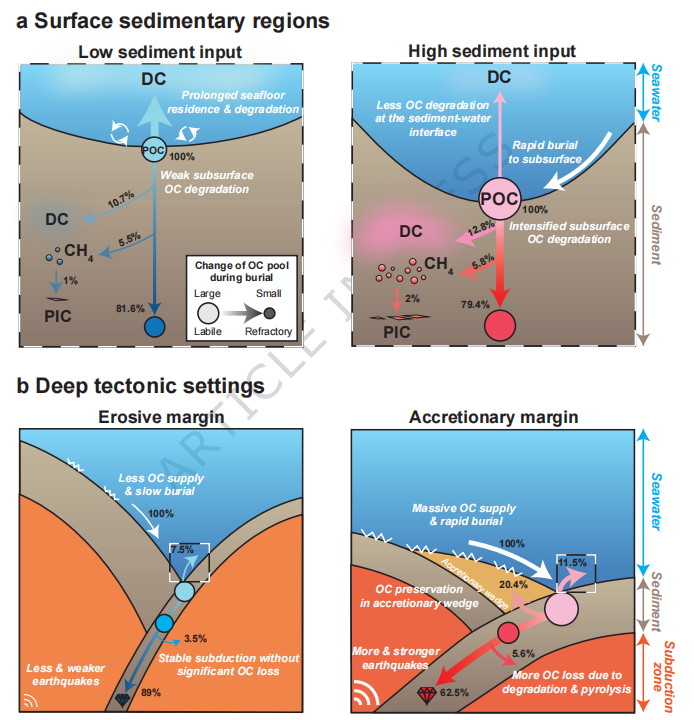
Conceptual model illustrating the organic carbon (OC) degradation, pyrolysis and subduction from the seafloor to subduction zone.
Citation: Chu, M., Liu, K., Cai, Z., Rasbury, T., Kölling, M., Zabel, M., McHugh, C., Strasser, M., Ikehara, K., & Bao, R. (2026). Sediment-modulated seafloor residence time controls efficient organic carbon burial in subduction zones. Nature Communications. https://doi.org/10.1038/s41467-026-72049-9